
Complete Glass Solutions
Complete Glass Solutions:
At BASUDHA Aluminium Industries, we believe glass is more than a transparent surface. It defines the character of a building, controls the entry of natural light, influences indoor comfort, enhances privacy and contributes to safety.
Our glass solutions are designed to complement modern aluminium windows, Domal systems, slim-profile doors, sliding systems, curtain walls, structural glazing, partitions, skylights and selected architectural applications.
We help homeowners, architects, builders, interior designers and commercial developers select suitable glass based on the building's design, location, exposure, safety requirements, energy performance and budget.
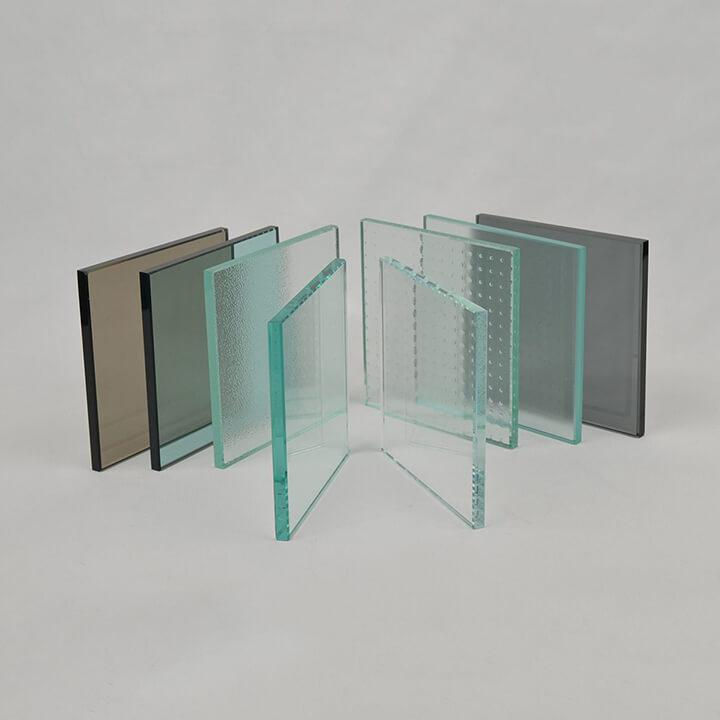


1. Clear Float Glass
Transparency • Natural light • Unobstructed views
Clear float glass is manufactured by floating molten glass over a bath of molten tin to create a smooth, flat surface with consistent thickness.
Key features
-
High visual clarity and a clean appearance.
-
Allows natural daylight into interiors.
-
Suitable for a wide range of aluminium glazing systems.
-
Can be further processed into toughened or laminated glass where compatible.
Applications: Residential windows, doors, fixed glazing, internal partitions and shopfronts.
Important: Ordinary annealed glass is not a substitute for safety glass where safety glazing is required.

2. Toughened (Tempered) Glass
Strength • Safety • Modern appearance
Toughened glass is produced by heating glass to a high temperature and rapidly cooling it under controlled conditions. This creates surface compression, increasing its strength compared with ordinary annealed glass of similar thickness.
Key features
-
Better resistance to thermal stress and impact than comparable annealed glass.
-
Breaks into small granular fragments rather than large sharp shards in typical breakage.
-
Available in clear, tinted and selected coated configurations.
-
Can be used in frameless or framed designs when properly engineered.
Applications: Sliding doors, shower enclosures, partitions, selected facades, glass railings and other applications requiring safety glazing.
Important: Toughened glass generally cannot be cut, drilled or edge-worked after tempering.
All dimensions and holes must be finalised beforehand. Broken toughened glass does not remain intact like laminated glass.

3. Laminated Safety Glass
ragment retention • Safety • Security options
Laminated glass consists of two or more glass plies bonded together with an interlayer, commonly PVB or an appropriate alternative. If the glass breaks, the interlayer helps hold the fragments together.
Key features
-
Helps retain broken glass fragments.
-
Can provide improved protection against falling fragments when correctly designed.
-
Selected configurations can improve acoustic performance and reduce UV transmission.
-
Can be made using suitable annealed, heat-strengthened or toughened glass plies.
Applications: Overhead glazing, skylights, canopies, selected railings, shopfronts, doors and safety-sensitive glazing.
Important: Glass composition, interlayer, support conditions and thickness must be designed for the application. Laminated glass is not automatically bullet-resistant or burglary-proof.

4. Double Glazed Units (DGU/IGU)
Thermal insulation • Indoor comfort • Noise reduction potential
A double-glazed unit consists of two panes separated by a sealed cavity containing air or a suitable gas. A spacer and edge-seal system help maintain the cavity and unit integrity.
Key features
-
Can reduce heat transfer compared with single glazing.
-
Can help improve indoor temperature stability.
-
May reduce external noise, depending on pane thicknesses, cavity, laminated layers and frame design.
-
Can incorporate Low-E or solar-control glass for enhanced performance.
Typical configurations
-
5 + 12 + 5 mm: two 5 mm panes with a 12 mm cavity.
-
6 + 12 + 6 mm: two 6 mm panes with a 12 mm cavity.
-
6 + 16 + 6 mm: two 6 mm panes with a 16 mm cavity.
Applications: Premium residences, offices, hotels, high-performance windows and selected facade systems.
Important: The cavity dimension, edge seal, drainage, frame rebate and total unit thickness must be compatible with the aluminium system. Acoustic performance is not determined by cavity size alone.

5. Reflective Glass
Exterior aesthetics • Solar reflection • Facade design
Reflective glass uses a reflective coating to change the appearance of the building and influence how solar energy passes through the glazing.
Key features
-
Creates a contemporary reflective exterior.
-
Can help reduce solar heat gain depending on the specification.
-
Available in selected colours and performance levels.
-
Can provide different levels of outward visibility and privacy depending on lighting conditions.
Applications: Commercial buildings, offices, showrooms, curtain walls and architectural facades.
Important: Reflective glass does not guarantee privacy at night. Interior lighting and exterior conditions affect visibility

6. Solar Control Glass
Heat management • Daylight • Energy-conscious design
Solar-control glass is engineered to limit the amount of unwanted solar energy entering a building while allowing a useful level of daylight.
Key features
-
Helps manage solar heat gain in sun-exposed spaces.
-
Can reduce cooling demand when correctly selected.
-
Available in different visible-light transmission and solar-performance levels.
-
Can be integrated into suitable single-glazed or insulated-glazing designs.
Applications: West-facing windows, large glass facades, offices, modern residences and buildings exposed to strong sunlight.
Important: Choose glass using technical performance values such as solar heat gain coefficient (SHGC or g-value), visible light transmission (VLT) and U-value, rather than colour alone.
